
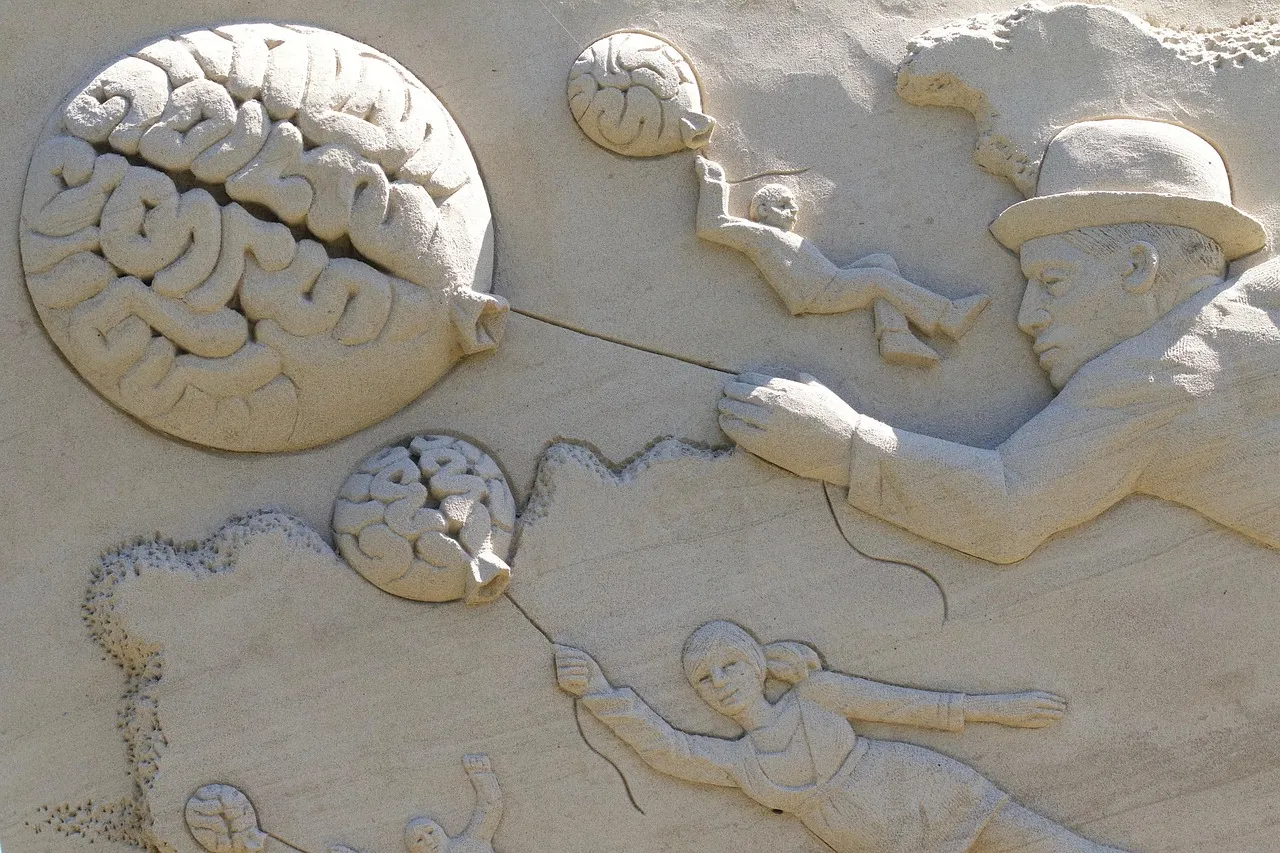
Here is the idea that has changed how I think about almost everything we do at the studio: your brain does not passively receive the world. It predicts it. What you see, hear, and feel is not a faithful recording of what is out there. It is your brain's best guess, built from past experience and current expectation, with the raw sensory data used mainly to correct the guess when it is wrong.
If that is true, and the neuroscience increasingly says it is, then a brand is not just a logo or a colour or a tone of voice. A brand is a prediction. It is the expectation a customer brings to the experience before the experience has even started. And that expectation does not just colour how they feel about you. It changes what they actually perceive.
The brain as a prediction machine
The old picture of perception was simple and wrong. We assumed the senses gathered information, passed it up to the brain, and the brain assembled a picture of reality from it. Bottom-up, like a camera. The model that has taken hold in cognitive science over the last two decades runs the other way. The brain is constantly generating predictions about what it is about to sense, and what reaches conscious awareness is that prediction, adjusted by whatever sensory evidence contradicts it.
The philosopher and cognitive scientist Andy Clark calls the brain a hierarchical prediction machine. The neuroscientist Lisa Feldman Barrett makes the same case for emotion: what you feel is a prediction your brain constructs, not a readout of the world. The idea is not new, it traces back to Hermann von Helmholtz in the 1860s who coined the term 'Unconscious inference', but modern neuroscience has given it real weight. Anil Seth puts it memorably: perception is a kind of controlled hallucination, one we mostly agree on because our predictions are mostly accurate.
Some of this was my world once. Years ago I did a PhD and a postdoc in computational neuroscience, building models of how the brain selects what to do, so the prediction machine is familiar ground rather than something I read about last week. That is also why I am wary of anyone in marketing who waves a brain scan around to sell you something, so I will keep the claim modest: the core finding is robust, and it matters for our work. Expectation is not a layer on top of experience, it is part of how experience is made.
The wine that tasted better because it cost more
One of the clearest demonstrations comes from a 2008 study published in the Proceedings of the National Academy of Sciences. Researchers gave people wine to taste while scanning their brains, and told them the price of each one. The catch was that some wines were served twice at different prices. The same wine, presented as a 90 dollar bottle, was rated as more pleasant than when it was presented as a 10 dollar bottle.
That alone is not surprising; people say all sorts of things to please an experimenter. What makes the study matter is that the scanner showed the difference was real. Activity in the part of the brain that encodes experienced pleasure was genuinely higher when people believed the wine was expensive. The price tag did not just change what people said about the wine. It changed how much they actually enjoyed it, at the level of brain activity. And in a blind tasting weeks later, with no prices shown, the differences vanished.
Read that again, because it is the whole point. The expectation set by a price, a piece of marketing, reached back and altered the experience itself. Not the opinion of the experience. The experience.
What this means for a brand
If expectation shapes perception, then everything that sets the expectation is doing real work before a customer has read a word of your copy or used a single feature of your product. It starts with the first impression a page makes in the opening milliseconds, and runs through the confidence of your pricing and the consistency of your name and look across every place you appear. All of it is loading the prediction your customer's brain will run when they finally deal with you.
This is why a cheap, dated, inconsistent website costs more than the work it would take to fix it. It is not that people consciously think less of you. It is that you have primed them to expect less, and that expectation quietly degrades how they experience everything that follows. The reverse is also true. A considered, coherent, confident presence sets a prediction of competence, and customers then perceive your actual work through that lens.
The stories we tell ourselves
The same machinery that makes a customer enjoy expensive wine more runs throughout our minds. Science writer David Robson, in his book 'The Expectation Effect', gathers the evidence that what we expect of a situation, our health, our ageing, our own capability, can measurably shape the outcome. While some of the examples he uses are not as scientifically robust as I'd like, I do think the core claim holds up: our predictions about the world are not just commentary, they feed back into our experiences, and have real influence over our actions and decisions.
That can cut both ways. Where a confident, positive story about a company or product can lead to better experiences, a sceptical, defeated story can help bring about the very result it fears. An expectation is not a neutral bystander. It shapes how we act, and our actions have a real influence on outcomes, so the prediction quietly works to make itself true. That is worth knowing whichever way the expectation runs, because the same effect that can talk us into a poor outcome can, honestly set, help bring about a good one.
The honest way to use this
It would be easy to read all this as a licence to manipulate. Set a high price, dress it up, exploit the prediction machine. That works for exactly as long as it takes reality to contradict the prediction, and the brain is very good at noticing when it has been misled. Prediction errors are how it learns. Fool someone once and you have not just lost a sale, you have taught their brain to predict disappointment from your brand.
So the honest use is the durable one: set an accurate, confident expectation, and then meet it. Beat it, even. A pleasant surprise is a prediction error too, and it teaches the brain the opposite lesson to the one a let-down teaches, nudging its expectation of your brand upward rather than down. The only rule is that you cannot promise the surprise in advance, or it stops being one.
For us that means building a website that matches the business behind it, so the prediction it sets is one that business can honour. For you it is the same principle wherever you set an expectation. Price with conviction when the quality is genuinely there, rather than trying to trick your customer's brain. Tell a true story well rather than a flattering story badly. Keep the promise and the reality on the same side, so the only surprises are good ones, and the prediction machine becomes your ally instead of a trap you have set for yourself.